1. Stay on the Trail (Even When It’s Tempting)
Kids love to explore — but staying on marked trails is one of the most important outdoor rules.
Teach kids that staying on the trail:
Protects plants and fragile ecosystems
Prevents erosion
Keeps everyone from getting lost
Kid-friendly explanation:
“The trail is like a path through someone else’s backyard — we stay on it to keep nature healthy.”
 Read more: Safety Basics for Kids Read more: National Park Service – Stay on Trails
2. Yielding: Who Goes First on the Trail?
This is a great lesson in courtesy and awareness.
Simple rules kids can remember:
Hikers going uphill usually have the right of way
Step aside for faster hikers or runners
Always yield to horses (stand downhill and stay calm)
Teach kids to:
Step to the side
Smile or say hello
Let others pass safely
Read more: Safety Basics for Kids
3. Use Inside Voices (Nature Is Not a Playground)
Excitement is normal — but shouting can disturb wildlife and other hikers.
Encourage kids to:
Talk quietly
Listen for birds and wind
Use “trail voices” instead of playground voices
This turns etiquette into a fun awareness game rather than a rule.
Read more: Leave No Trace – Be Considerate of Other Visitors
4. Leave What You Find
Kids naturally want to collect treasures — rocks, flowers, feathers.
Teach them:
Look, don’t take
Take photos or draw pictures instead
Nature stays for everyone to enjoy
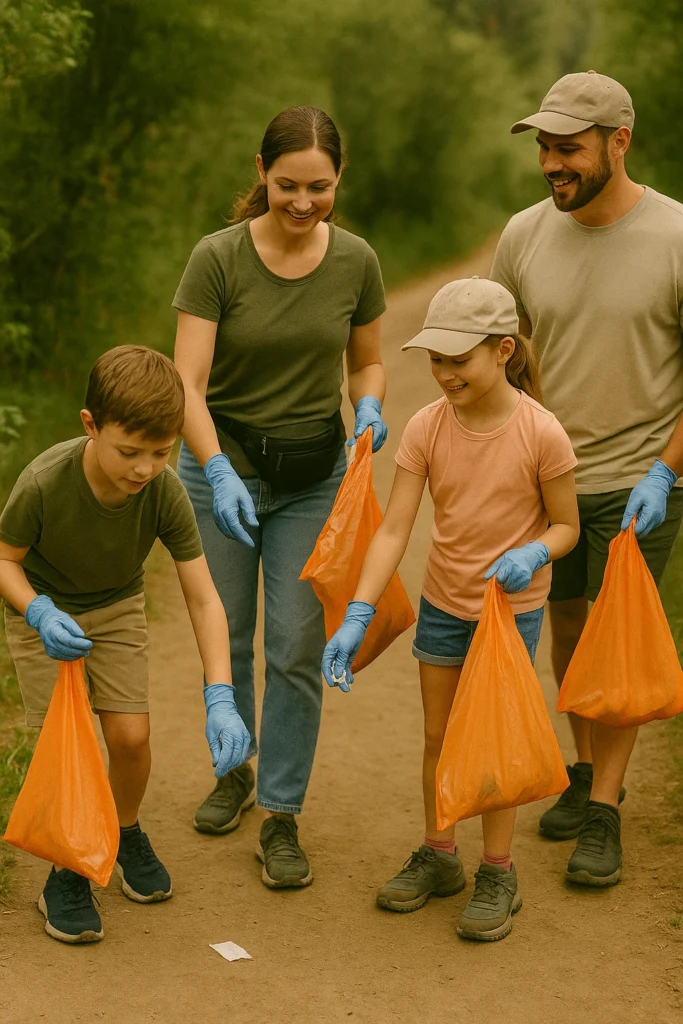
Exception: picking up trash is always encouraged.
Read more: Nature Education & STEM Read more: Leave No Trace – Leave What You Find
5. Pack It In, Pack It Out (Including Snack Trash)
Snack wrappers, wipes, and tissues don’t belong on the trail.
Make it fun by:
Giving kids their own small trash bag
Turning cleanup into a “trail helper” mission
This builds pride and responsibility.
Read more: Essential Hiking Gear for Kids
6. Respect Wildlife (Watch, Don’t Chase)
Seeing animals is exciting — chasing them is dangerous and harmful.
Teach kids to:
Watch quietly
Never feed animals
Keep a safe distance
Stay calm if wildlife appears
Explain that animals need space just like people do.
Read more: National Park Service – Wildlife Safety