Outdoor Skills Kids Can Learn on the Trail (Ages 5–10)

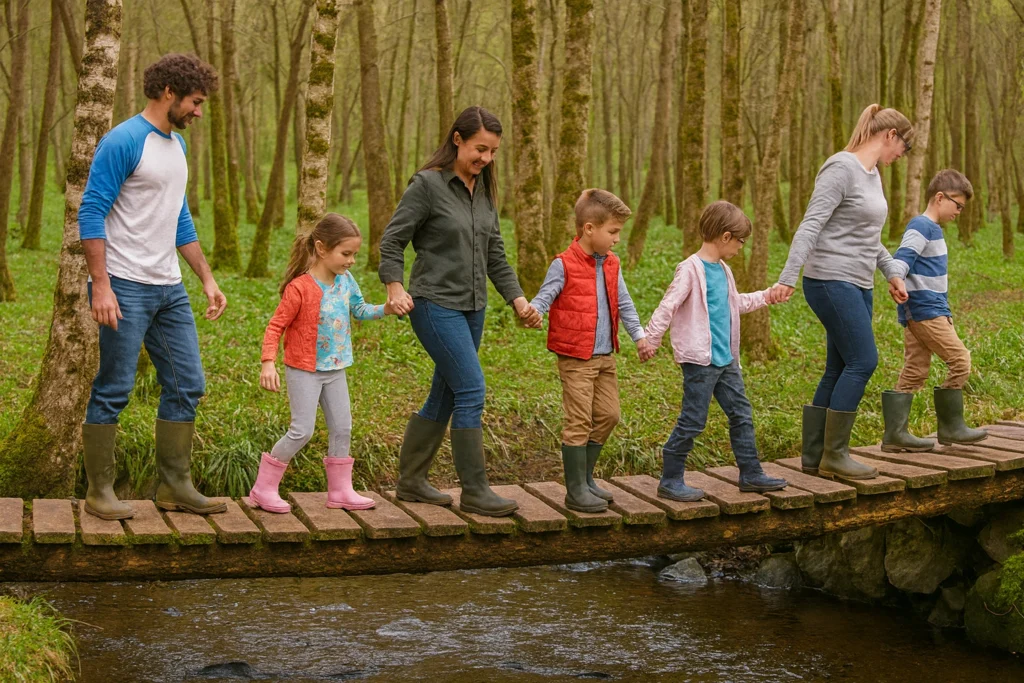
outdoor skills for kids - children learning an outdoor activity by crossing an unsteady but safe bridge

Hiking with kids isn’t just about reaching a scenic overlook — it’s about building confidence, curiosity, and real-world skills along the way. For children ages 5–10, the trail becomes a hands-on classroom where learning feels like play and lessons stick for life.

The key is keeping skills simple, practical, and empowering, without overwhelming young hikers. Below are outdoor skills kids can realistically learn on the trail, broken down in a way parents can easily teach — and kids can proudly practice.

🌲 1. Trail Awareness & Staying Together

One of the most important early skills kids learn on hikes is situational awareness.

Kids can practice:

  • Staying within sight of a parent or sibling

  • Watching for trail markers and blazes

  • Stopping at trail junctions instead of wandering ahead

Make it fun by turning awareness into a game:

“Who can spot the next trail marker first?”

This skill reinforces safety concepts introduced in our
➡ Read more: Hiking Safety Basics Every Child Should Know

🧭 2. Basic Navigation (Kid-Level)

Children don’t need advanced map skills — but they can start learning the basics.

Age-appropriate navigation skills include:

  • Recognizing trail signs and symbols

  • Understanding “start,” “turn,” and “end” points

  • Holding a map and following along visually

  • Learning left vs. right turns on the trail

For curious kids (ages 7–10), introducing a simple compass can be exciting:

  • “This arrow points north.”

  • “We’re walking east toward the lake.”

For parents, the National Park Service explains why early navigation skills matter in family hiking:
🔗 National Park Service – Hiking Safety

🥾 3. Choosing Foot Placement & Balance

Trails are full of natural obstacles — roots, rocks, mud, and uneven ground. These are perfect opportunities to teach body awareness and balance.

Kids can learn to:

  • Step over roots instead of tripping

  • Test slippery rocks before stepping

  • Walk around puddles instead of through them

  • Slow down on steep or rocky sections

This builds coordination and reduces falls — especially when paired with properly fitted footwear discussed in
➡ Read more: Essential Hiking Gear for Kids

🌦️ 4. Weather Awareness & Smart Decisions

Kids love learning how nature works — especially weather.

Trail-based lessons include:

  • Feeling temperature changes in shade vs. sun

  • Noticing wind direction

  • Watching clouds build or move

  • Understanding why breaks and layers matter

Simple prompts help:

“Do you feel colder now than earlier?”
“What do those clouds look like?”

This encourages kids to speak up if they’re cold, hot, tired, or uncomfortable — a critical safety habit.

For deeper weather education, NOAA offers kid-friendly weather resources:

➡ Read more: NOAA Weather Safety for Kids

🌱 5. Respecting Nature & Leave No Trace Basics

Trail etiquette and environmental respect are skills kids absorb quickly when modeled consistently.

Teach kids to:

  • Stay on the trail

  • Leave plants, rocks, and animals undisturbed

  • Pack out snack wrappers and trash

  • Observe wildlife quietly from a distance

A simple rule works well:

“Take pictures, not souvenirs.”

This connects naturally with
➡ Read more: Trail Etiquette for Kids: How to Be Kind, Safe, and Respectful Outdoors

🎒 6. Managing Their Own Gear

Kids feel empowered when they’re trusted with responsibility.

Age-appropriate gear skills include:

  • Carrying their own water bottle

  • Zipping and unzipping their backpack

  • Knowing where snacks or wipes are stored

  • Checking that chest straps are buckled

This builds independence and reduces parent workload — while reinforcing preparedness.

🗣️ 7. Communication & Problem-Solving

Hiking teaches kids how to communicate clearly and calmly.

Encourage them to:

  • Say when they need a break

  • Ask questions about the trail

  • Speak up if they feel unsure or uncomfortable

  • Help siblings or friends

These skills translate far beyond hiking — into school, sports, and everyday life.

🏕️ 8. Learning Through Play

The best trail skills are learned through play, not lectures.

Try:

  • Nature scavenger hunts

  • Counting steps between trail signs

  • Spotting animal tracks or bird sounds

  • Guessing how far the next bend goes

You can extend these lessons at home with printable activities found in
➡ Read more: Adventure Learning at Home

🌟 Why These Skills Matter

When kids learn outdoor skills early, they:

  • Feel confident instead of fearful

  • Learn responsibility in a natural way

  • Build trust with parents and siblings

  • Develop a lifelong connection to the outdoors

Hiking becomes more than a walk — it becomes a shared journey of growth.

Next Steps for Families

If you’re just getting started, we recommend reading these next:

Together, these guides help families hike safer, smarter, and with more confidence — one trail at a time.