Essential Hiking Gear for Kids: What They Really Need (and What They Don’t)

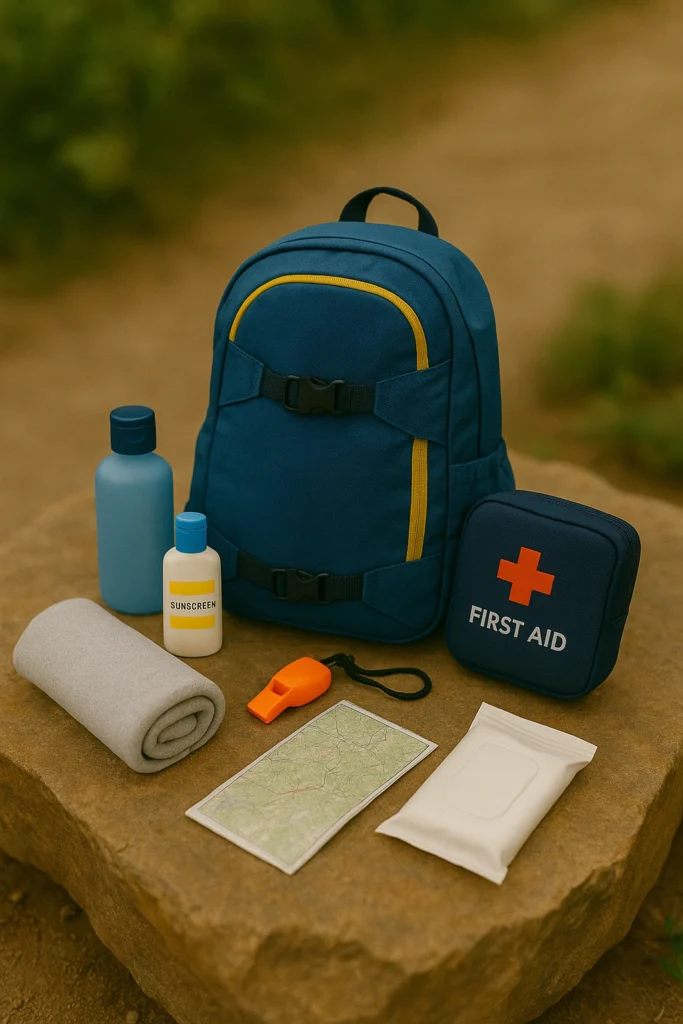
essential hiking gear for kids - layout of items a child might need in their pack

Why Kids’ Hiking Gear Matters (But Doesn’t Need to Be Complicated)

Taking kids hiking is about building confidence, curiosity, and a love for the outdoors—not weighing them down with unnecessary gear. Parents often feel pressure to overpack, but the truth is simpler: kids need only a few essentials to stay safe, comfortable, and engaged on the trail.

This guide breaks down what kids truly need, what’s optional, and what you can confidently leave at home—especially for short, family-friendly hikes.

The 7 Essentials Kids Actually Need on the Trail

🥾 1. Proper Footwear (Not Fancy Boots)

Kids don’t need expensive hiking boots for most hikes.

What works best:

  • Closed-toe sneakers or trail shoes

  • Good tread and toe protection

  • Socks that reduce friction (avoid cotton if possible)

👉 For more on keeping kids comfortable, see our article:

➡ Read more: Hiking Safety Basics Every Child Should Know 

🎒 2. A Small, Child-Sized Backpack

Let kids carry something, but keep it light.

Look for:

  • Proper fit (not oversized)

  • Chest strap for stability

  • Space for water and one small item

Kids feel proud carrying their own gear—and it builds responsibility.

💧 3. Water (More Than You Think)

Hydration is non-negotiable.

Best options:

  • Small reusable water bottle

  • Hydration bladder for older kids

For longer hikes, parents should carry extra water. According to the CDC, dehydration can affect children faster than adults, especially in warm weather.

☀️🦟 4. Sun & Bug Protection

Even shaded trails can expose kids to sun and insects.

Pack:

  • Travel-size sunscreen

  • Child-safe insect repellent

  • Hat with a brim

This is especially important during spring and summer hikes.

🩹 5. Basic First-Aid Items

Kids don’t need a full kit—but parents should carry:

  • Bandages

  • Blister care

  • Antiseptic wipes

  • Any personal medications

➡ Read more: Safety Basics for Kids: Staying Comfortable on the Trail 

🧭 6. Simple Safety Tools (Optional but Fun)

For kids ages 6+:

  • Whistle clipped to their pack

  • Simple compass (teaching tool, not navigation-critical)

The National Park Service encourages teaching kids basic safety signals early, including using whistles to get attention if separated.

🧃 7. One Comfort Item

A small item can make a big difference:

  • Lightweight jacket

  • Small snack

  • Bandana or wipes

Comfort keeps morale high—and happy kids hike farther.

What Kids Don’t Need (Save Your Money)

🚫 Heavy trekking poles
🚫 Large hydration packs
🚫 GPS devices or radios
🚫 Multi-tools or knives
🚫 Full rain shells on short hikes
🚫 Extra clothing changes (unless weather demands)

If parents are carrying essentials, kids can focus on enjoying the hike—not managing gear.

How Much Weight Should Kids Carry?

A good rule:

  • No more than 10–15% of a child’s body weight

For younger kids, that often means:

  • Water

  • Snack

  • One small personal item

Anything more belongs in the adult pack.

Teaching Responsibility Through Gear

Let kids:

  • Choose their backpack color

  • Fill their own water bottle

  • Check off a short gear list

This builds confidence and ties into our Trail Etiquette for Kids series, where responsibility and awareness go hand in hand. 

Quick Checklist: Kids’ Hiking Gear Essentials

✅ Proper shoes
✅ Small backpack
✅ Water
✅ Sun & bug protection
✅ Basic first aid (parent-carried)
✅ Optional whistle or compass
✅ One comfort item

Final Thoughts: Less Gear, More Adventure

The goal isn’t to prepare kids for extreme conditions—it’s to help them love being outside. Start simple, stay flexible, and adjust gear as kids grow more capable.

When kids feel comfortable and confident, hiking becomes something they ask to do again.

“As an Amazon Associate I earn from qualifying purchases.”