Adventure doesn’t have to stop when you’re indoors. Whether it’s bad weather, a busy week, or the off-season between hikes, adventure learning at home gives kids a way to stay curious, confident, and connected to the outdoors—right from the living room.
By practicing simple outdoor skills at home, kids build knowledge and confidence that carry over to the trail. These hands-on activities are fun, low-pressure, and perfect for ages 5–10, helping children learn through play while strengthening real-world skills.
Why Adventure Learning at Home Matters
Outdoor skills aren’t just about hiking—they’re about problem-solving, awareness, and independence. Practicing these skills indoors helps kids:
Build confidence before real-world adventures
Learn safety concepts in a calm environment
Strengthen focus, coordination, and patience
Stay connected to nature year-round
For parents, it’s also a great way to prepare kids before their first family hike or reinforce lessons learned outdoors.
Knot Tying Basics
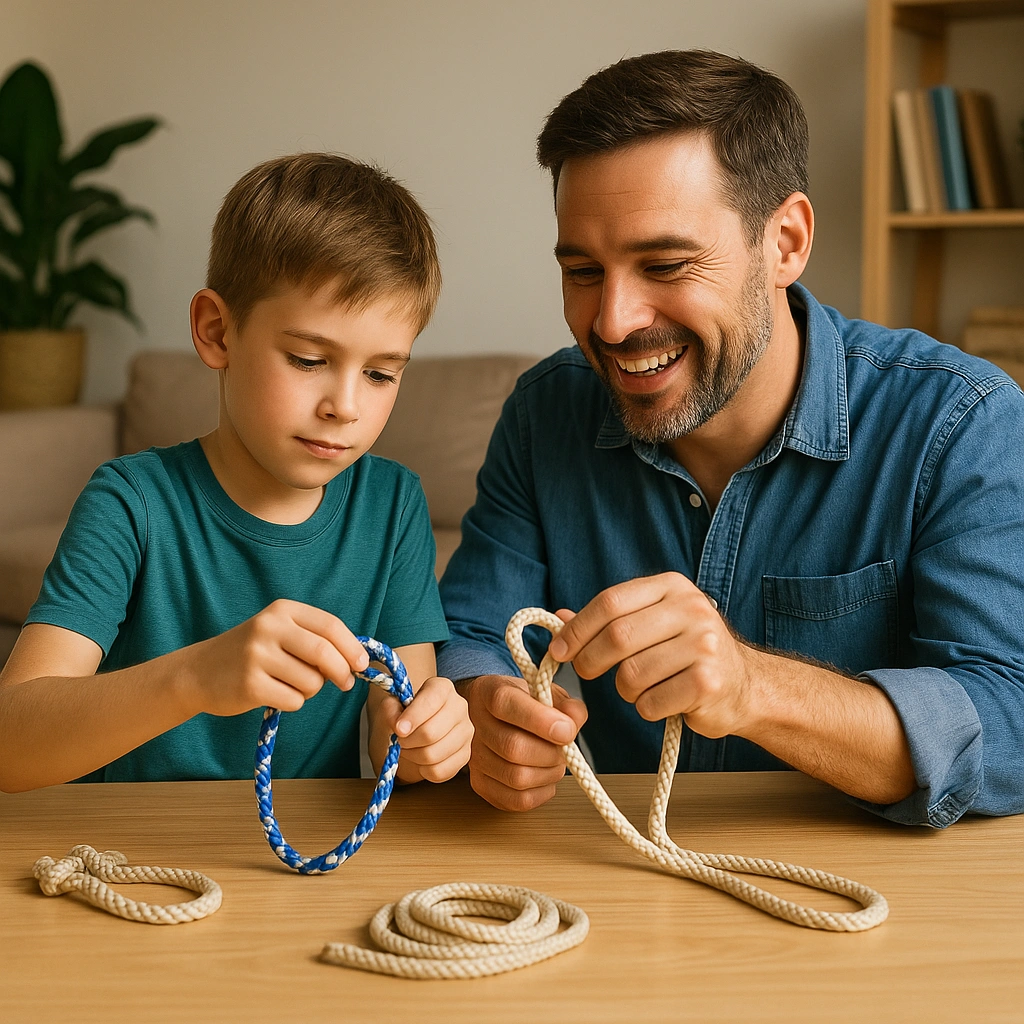
Knot tying is one of the easiest and most valuable outdoor skills to practice indoors.
Skills kids can learn:
Overhand knot
Square knot
Loop knot
How to practice:
Use soft rope, paracord, or even shoelaces. Let kids follow along while you demonstrate slowly, turning it into a game or challenge.
👉 This skill directly supports trail readiness and gear awareness. Read more: Safety Basics for Kids article)
Map Awareness & Direction Games
Kids don’t need full navigation skills yet—but they can start learning direction and awareness.
Indoor activity ideas:
Draw a simple map of your home or backyard
Practice “left, right, forward, backward” directions
Use a toy compass to identify north, south, east, and west
This builds early navigation confidence without overwhelming them.
For more advanced learning later, the National Park Service Hiking Safety Guide emphasizes early awareness and orientation skills.
Packing a Mini Adventure Kit
Packing is a great way to teach responsibility and preparation.
What kids can practice packing:
Small backpack
Water bottle
Snack
Hat or jacket
Whistle
Lay items out and ask kids to decide what belongs in their pack and why. This pairs perfectly with gear education.
Read more: Essential Hiking Gear for Kids: What They Really Need (and What They Don’t)
First Aid Awareness (Kid-Level)
Kids don’t need medical training—but they can learn the basics.
Simple lessons:
What a bandage is for
Why we clean scrapes
When to tell an adult
Let kids explore a mini first-aid kit and talk through simple scenarios calmly.
According to the American Red Cross, early exposure to first-aid concepts helps children respond more confidently in real situations.
Nature Observation Games
You can practice observation skills even indoors.
Easy activities:
Nature scavenger hunts (colors, shapes, textures)
Sorting leaves, rocks, or pinecones
Watching birds through a window and noting behavior
These activities strengthen attention to detail and curiosity—key skills for outdoor learning.
Read more: Simple Nature Science Kids Can Learn While Hiking
Trail Etiquette Role-Playing
Kids learn best by acting things out.
Practice scenarios:
Who steps aside on the trail
Why we stay on marked paths
How to respect wildlife
Role-playing helps kids understand expectations before they’re on a real trail.
Read more: Trail Etiquette for Kids: How to Be Kind, Safe, and Respectful Outdoors
Weather Awareness Basics
Use everyday weather changes to teach awareness.
Indoor-friendly ideas:
Talk about what clothes match different weather
Watch clouds and describe shapes
Discuss what to do if weather changes suddenly
The National Weather Service highlights early weather awareness as a core outdoor safety skill.
Making Adventure Learning Fun (Not Forced)
The goal isn’t perfection—it’s curiosity.
✔ Keep sessions short
✔ Let kids lead
✔ Celebrate effort, not accuracy
✔ Turn lessons into games
Adventure learning at home should feel playful, not like schoolwork.
Final Thoughts
Outdoor confidence starts long before kids step onto a trail. By practicing simple skills at home, children develop awareness, responsibility, and excitement for future adventures.
When the next hike comes, they won’t just be tagging along—they’ll feel forward geared, prepared, and proud of what they know.
“As an Amazon Associate, I earn from qualifying purchases.”
